
Skip to content

Character animation / rigging

Give every move a reason.

Xipanelori is a motion archive for animators, directors and teams who want a character’s movement to carry thought. We build from intention, reference, timing and the small decisions that make a pose feel alive.

Workshop modeCharacter-first
MaterialPose & timing
OutputClear next pass
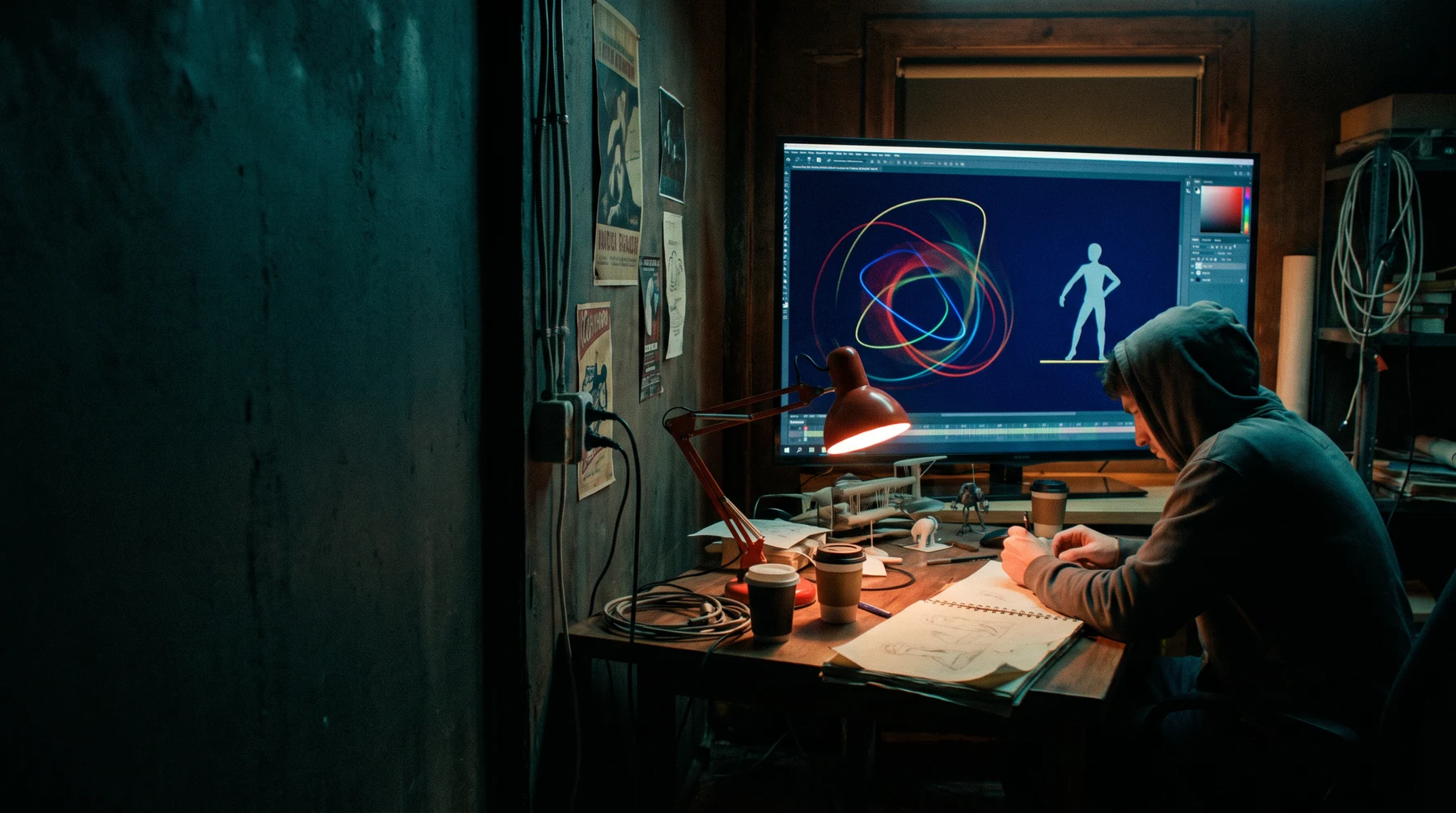
Animator reviewing abstract motion curves in a dark studio
Archive entry 12 / 24Movement is a decision seen over time.
Work in sequence
01 / Locate the inner action
02 / Stage the visible choice
03 / Keep the revision usable

01 / Motion index

A character does not move in one dimension.

Choose a dial to see how we establish a motion problem before selecting a solution. The index keeps a team from jumping straight to polish.

Hands adjusting an articulated wooden puppet

Dial 01 / Weight

Let the body admit gravity.

We begin by asking what the character is carrying, resisting or releasing. Weight is not a visual effect; it is the pressure that gives each transition a believable consequence.

02 / Scene construction

Build the scene, not just the shot.

Reliable movement is easier to discuss when the work is divided into practical attention points. Xipanelori makes each one visible so a change in animation does not accidentally erase the intention behind it.

A movement brief should show what the character wants the audience to understand.


01

Beat

Name the shift in attention before deciding how large the action should become.

02

Arc

Trace a path that feels owned by this body, not a generic graphic curve.

03

Contact

Give hands, feet and props a moment of consequence rather than a passing touch.

04

Release

Let the last pose leave enough information for the next decision to be made.

03 / Reference library

Collect what the body can use.

The archive is not a mood board. It is a set of physical and behavioural cues that can be returned to when a scene has become too smooth, too busy or too vague.

04 / Rig room

A rig is a conversation with the character.

Controls are not simply a checklist. A useful rig gives the animator access to the tensions, asymmetries and timing choices that tell us who a character is.

  • Controls grouped by the question they answer01
  • Handoffs recorded before the scene changes hands02
  • A practical route for feedback and retakes03
  • Limits named as part of the design04
Hand turning a small paper flipbook
Small timing studies often reveal a rig’s most useful question.

05 / Route queue

Choose the question that needs the room.

Route / New scene

Start with the action underneath the action.

A new scene needs a compact brief: the beat, the character’s point of view, what changes, and the reference that can keep the first pass honest. This makes exploration possible without making the review room unreadable.

Prompt: What should remain true even if every pose changes?

06 / Working agreements

Make the pass easy to revisit.

Show the brief

We keep the scene question in view alongside reference, rather than leaving it in a chat thread or a private interpretation.

Name the edge

Every pass can declare what is still uncertain. That is more useful than pretending the request is already resolved.

Leave a route back

Feedback records a next decision, not just an opinion, so the work can be picked up without re-reading the entire history.

07 / Questions

What people ask before the first frame.

A useful brief names the story beat, the character’s immediate point of view, the action the audience needs to read, and the material that can ground the performance. It also states the decision still open to exploration, so the first pass does not confuse a working question with a fixed instruction.

Yes. Early animation can be particularly useful when it makes assumptions visible before they become expensive. The working material is labelled as provisional, and the brief records which features might change. That lets the team test timing, intent and staging without pretending that an unfinished model is a final character.

Notes work best when they connect an observation to a decision. Instead of saying a moment feels wrong, we identify the intended read, where the current pass changes it, and which next test would clarify the choice. That gives the animator a route forward while preserving room for interpretation and craft.

Xipanelori is an informational workshop format for exploring character animation and rigging methods. It does not sell a packaged course or promise production results through this site. A contact inquiry simply opens a conversation about whether a particular movement question, team context or workshop format is appropriate to discuss further.

08 / Open the brief

Put the question in motion.

Share the part of the character, scene or handoff that needs a clearer working frame. This browser-only form does not transmit a message.

[email protected]

Brief staged in this browser only. No message was sent or stored. To discuss a workshop, email [email protected].